
Reclaim Your Strength
Pelvic Floor Exercises Designed for Men 40+
A comprehensive guide to rebuilding core strength, improving everyday function, and enhancing your quality of life through targeted pelvic floor training. Discover evidence-based techniques that work for your age and fitness level.
The information on this site is for educational purposes only and does not constitute medical advice. Always consult a qualified healthcare professional before making health decisions.
Why Pelvic Floor Health Matters After 40
As men age, the pelvic floor muscles naturally weaken due to reduced physical activity, hormonal changes, and cumulative stress. This decline often goes unnoticed until it affects daily life—whether through reduced urinary control, decreased sexual function, or lower back pain.
The pelvic floor is your body's foundation. These muscles support your bladder, bowel function, and sexual health. They also work together with your core to stabilize your spine and maintain proper posture. When they weaken, the effects ripple outward.
The good news: targeted pelvic floor exercises can restore strength and function at any age. Men in their 40s, 50s, and beyond have seen remarkable improvements in just 6–12 weeks of consistent training.
- Improved bladder control — reduce urgency and nighttime interruptions
- Enhanced sexual function — stronger muscles improve sensation and endurance
- Reduced back pain — a stronger pelvic floor stabilizes your entire core
- Better posture and stability — prevent falls and improve athletic performance
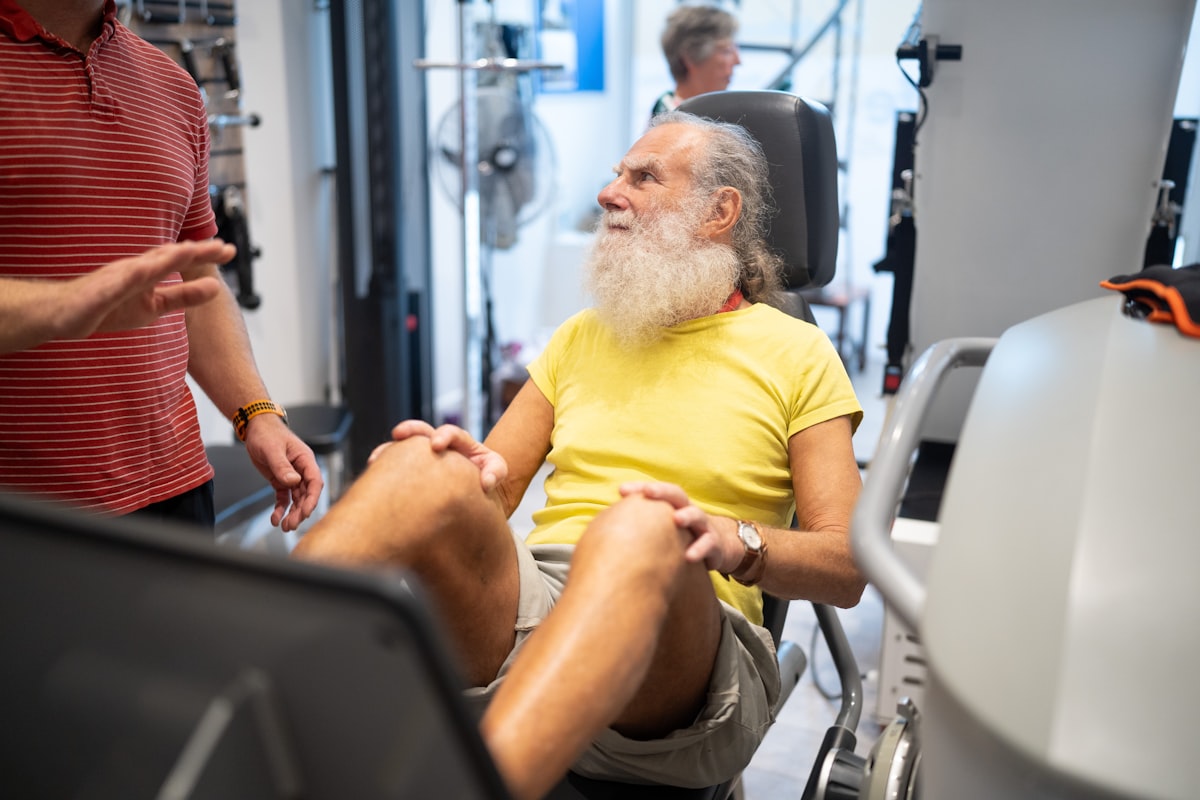
Your 6-Week Progressive Training Journey
Follow this step-by-step progression to safely rebuild pelvic floor strength and see noticeable results in just six weeks.
Weeks 1–2: Foundation
Learn to identify and activate your pelvic floor muscles correctly. This is the most critical phase—many men have never consciously engaged these muscles before.
- Daily practice: 10 minutes
- Key exercise: Basic squeeze-and-release technique
- Reps: 3 sets of 10 pulses
- Focus: Breathing and muscle awareness
Weeks 3–4: Building Endurance
Increase hold duration and introduce slower, sustained contractions. Your muscles begin to show visible fatigue resistance.
- Daily practice: 12–15 minutes
- New technique: 5-second holds with 5-second rest
- Reps: 3 sets of 8–10 holds
- Added benefit: Combine with slow breathing
Weeks 5–6: Advanced Strength
Push toward maximum intensity with longer holds and added complexity. Many men report functional improvements by this stage.
- Daily practice: 15–20 minutes
- Advanced technique: 10-second holds, rapid pulses, dynamic movement
- Reps: 3 sets of 5–8 maximum holds
- Integration: Combine with daily activities
Core Exercise Techniques
Master these foundational exercises to build pelvic floor strength safely and effectively.
Basic Squeeze and Release
The foundation of all pelvic floor training. This simple but powerful exercise teaches muscle awareness and builds baseline strength.
How to perform: Imagine stopping urinary flow mid-stream. Squeeze those muscles tightly for 2–3 seconds, then fully relax for 3 seconds. The key is a complete release between reps.
Progression: Week 1: 3 sets of 10 pulses. Week 3: 3 sets of 15 pulses. Week 5: Add 2-second holds for extra intensity.
The Sustained Hold
Build endurance by holding a contraction. This teaches your muscles to maintain tension over time—essential for bladder control.
How to perform: Squeeze your pelvic floor muscles and hold for 5 seconds while breathing normally. Do not hold your breath. Rest for 5 seconds, then repeat.
Progression: Week 3: Hold for 5 seconds, rest for 5. Week 4: Hold for 7 seconds, rest for 5. Week 6: Hold for 10 seconds, rest for 5.
Rapid-Fire Pulses
Quick, light contractions that improve muscle tone and responsiveness. Excellent for dynamic control during activity.
How to perform: Perform quick, one-second squeezes followed by one-second releases. Maintain a steady rhythm without fatigue. Perform 20–30 pulses per set.
Progression: Week 2: 2 sets of 20 pulses. Week 4: 3 sets of 25 pulses. Week 6: 3 sets of 30 pulses at a faster pace.
The Wave Contraction
An intermediate technique that involves layering contractions. Engages all three muscle compartments for comprehensive strength.
How to perform: Squeeze your pelvic floor in three stages: first the front area, then the middle, then the back. Hold all three areas for 5 seconds, then release in reverse order (back first, middle, front).
Progression: Week 4: 2 sets of 6 waves. Week 5: 3 sets of 8 waves with 7-second holds. Week 6: Add dynamic movement during holds.
Functional Integration
Practice pelvic floor activation during everyday movements. This bridges the gap between isolated exercises and real-life function.
How to perform: Engage your pelvic floor while standing, walking, or sitting. Perform a light squeeze while standing up from a chair, climbing stairs, or during coughing.
Progression: Week 3: Practice during 2 daily activities. Week 5: Practice during 4 daily activities. Week 6: Full integration into routine—activate before any sudden movement.
Breathing and Relaxation
Proper breathing amplifies the effectiveness of exercises and prevents muscle tension. Relaxation between contractions is as important as the squeezes.
How to perform: Inhale for 3 seconds (no contraction), exhale and squeeze for 2–3 seconds, then fully relax for 5 seconds while breathing freely. Never hold your breath during a contraction.
Progression: Week 1: Focus on relaxation. Week 3: Add deep belly breathing. Week 5: Coordinate breathing with intensity changes.
Key Features of a Complete Training Program
What separates successful pelvic floor training from ineffective routines.
Progressive Overload
Exercises gradually increase in difficulty—longer holds, more reps, or added complexity. This prevents plateauing and ensures continued strength gains week after week.
Consistent Routine
Pelvic floor training requires daily or near-daily practice. Consistency over intensity delivers the best results—15 minutes daily outperforms one intense 60-minute session per week.
Proper Form and Awareness
Many men initially engage the wrong muscles (glutes, abdominals, thigh muscles). Learning to isolate the pelvic floor through guided instruction is essential for success.
Real-World Integration
Isolated exercises are the beginning. True strength means activating these muscles during daily life—standing up, coughing, walking, and intimate moments.
Education and Understanding
Knowing WHY you're doing each exercise, how the pelvic floor connects to broader health, and what realistic timelines look like increases adherence and satisfaction.
Feedback and Adjustment
Pelvic floor work is invisible—you can't see the muscles. Access to guidance, common mistake correction, and progression recommendations helps you stay on track.
Common Questions About Pelvic Floor Training
Find answers to the most frequently asked questions about pelvic floor exercises for men.
Most men notice subtle improvements within 3–4 weeks of consistent training. Bladder control improvements and sexual function benefits often appear by week 6–8. More significant changes—such as complete elimination of urgency or dramatic improvements in endurance—may take 12 weeks or longer. Results vary based on starting fitness level, age, and consistency. The key is patience and adherence; pelvic floor training is cumulative.
A common challenge is identifying the correct muscles. The best initial test: during urination, try to stop the flow midstream. The muscles you use are your pelvic floor. Once identified, practice this squeeze outside of urination (never practice stopping urinary flow regularly—it can create tension patterns). You should NOT feel your glutes, abdominals, or thigh muscles tightening. If you do, you're engaging the wrong muscles. During exercises, your abdomen should remain relaxed and your breathing should be smooth. Many men benefit from guided instruction or feedback to ensure proper form.
Yes. Overtraining pelvic floor muscles can lead to tension, pain, or paradoxically worsen symptoms like urgency or erectile dysfunction. The pelvic floor is NOT a "no pain, no gain" muscle group. Quality matters far more than quantity. A 15–20 minute daily routine is far superior to excessive daily training. Additionally, rest days are important—aim for 5–6 training days per week, not 7. If you experience pain, worsening symptoms, or difficulty relaxing after training, reduce frequency and intensity. Complete rest for 3–5 days can reset a tense or fatigued pelvic floor.
Lack of improvement usually indicates one of three issues: improper form (engaging wrong muscles), insufficient consistency (missing training days), or an underlying condition requiring professional input. First, review your technique carefully—watch instructional videos or ask for feedback on your form. Second, commit to daily practice for at least 10 minutes. Third, if symptoms persist or worsen despite correct training, it may be worthwhile to consult with a healthcare professional who specializes in pelvic floor function. Occasionally, an overactive or hypertonic pelvic floor (muscles that are too tight) requires relaxation work before strengthening.
Pelvic floor exercises are generally safe for most men 40 and older. However, certain situations warrant caution or consultation: if you have chronic pelvic pain, ongoing sexual dysfunction, bowel control issues, or recent pelvic surgery. Additionally, men with a history of prostate issues should ensure proper form—incorrect technique can create unwanted tension. Men taking certain medications that affect muscle function should be aware that results may take longer. Start conservatively with the foundational exercises and progress gradually. Listen to your body; mild muscle fatigue is expected, but sharp pain is not.
Individuals with severe cardiovascular disease, uncontrolled hypertension, recent surgery, or acute musculoskeletal injuries should consult their healthcare provider before starting. Pregnancy requires modifications; consult your doctor. The program is designed to be adaptable, but medical clearance is essential for those with significant health concerns. When in doubt, always seek professional medical advice.
Success Stories from Our Community
James Mitchell
Age 58, Office Manager
"After years of sitting at a desk, I was skeptical about making changes. But Vitalsedentaryhealth's program met me where I was. Within 6 weeks, I noticed improved posture and better energy levels. The modifications made it accessible."
Sarah Rodriguez
Age 45, Teacher
"The program helped me understand how my sedentary habits were affecting my health. I love the educational approach combined with practical exercises. My back pain has reduced significantly."
Robert Kim
Age 62, Retired
"I thought mobility was something I'd lost forever. This program proved me wrong. The gradual progression kept me motivated, and I'm now more active than I've been in a decade."
Maria Chen
Age 51, Healthcare Professional
"As a healthcare worker, I understand the importance of movement. This program gave me science-backed strategies that fit my hectic schedule. I feel stronger and more resilient."